After a quarter of a century of hard work Reinhard still remains worried about the aging population of Germany but is as ever enthusiastic in working to find new solutions to better meet the needs of the elderly Europeans. Reinhard Pohlmann is the director of Older People’s Services in the Social Office of the city of Dortmund, part of the Committee of 16 Large German Cities. Apart from managing his office, he also oversees 8 community centres, is a member of the working group for older persons in the Ministry for Social Affairs, and acts as an advisor for stakeholders building new nursing homes in the area of Dortmund. Despite his vast experience in public social work with older people, Reinhard is always open to new ideas and solutions while discussing the ESN policy and practice group on long-term care with other social directors accross Europe. Every day I come across new experiences. There is always space to find new projects and working together with older people to find better solutions. It is absolutely interesting!
As a young university graduate in social sciences, Reinhard admits he did not initially contemplate working with elderly persons. Rather, he was much interested in the field of education for adults. His current career opened up as an opportunity when he got a chance to work in a nursing home as part of an NGO project in the city of Dortmund. In two years, I learned quite a lot working in nursing homes and felt that it is not only a field of problems but more so a field of opportunity to interact with older persons, their relatives and carers, politicians, media – Everything!
So what does this ‘everything’ mean in the city of Dortmund, the 2nd largest city in the North Rhine-Westfalia? In Reihnard’s diary it translates into busy days working to respond to the needs of the aging population in the city of 590 000 inhabitants where 25 % of inhabitants are 60 years or older. He starts every morning by managing his phone and mail correspondence, and then follows with staff meetings to sort out tasks for the day before he leaves the office to visit community centres in the 12 districts of Dortumund, or to participate in the weekly meeting of the Council of the City to discuss issues with policymakers. Once a week, Reinhard would also participate as a speaker in gatherings or clubs for elderly people, groups of NGO’s, church organizations, democratic parties etc. The extra time between meetings and visits would be used to write concept papers for local authority projects, or provide advice to companies who are interested in building new nursing homes.
Having dedicated more than two decades to this busy working tempo, Reinhard’s hard work pays off when he recognizes that he has contributed to build new structures where old people and their relatives can find appropriate support. According to him, structures are crucial in addressing older people’s needs. However, improving structures takes a lot of efforts, especially when working with politicians. To create structures, you need political decisions. When local government supports ideas and people get better support – that is my ultimate satisfaction. But, sometimes it takes years to achieve that. Working towards new structures with politicians, he explains, is a demanding exercise not least because on the one side they see older people as a quarter of the electorate who will cast their vote in the future, while on the other hand the care they need remains a heavy burden to the budget. Quite often finding a common ground among stakeholders is hard, Reinhard explains, as old structures are usually comfortable for service providers whereas his work focuses on making them more comfortable for older people.
Reinhard has worked hard in Dortmund to build a coalition among politicians and care providers to establish a network of 12 local information centres for older people. These centres are run jointly by Dortmund’s Sozialamt and the local Caritas: their staff come from both organisations and advise older people and their carers, family and friends on the services and support available in the city. He is proud of the way things are working and keen to develop the centres further better to meet the needs of the local population.
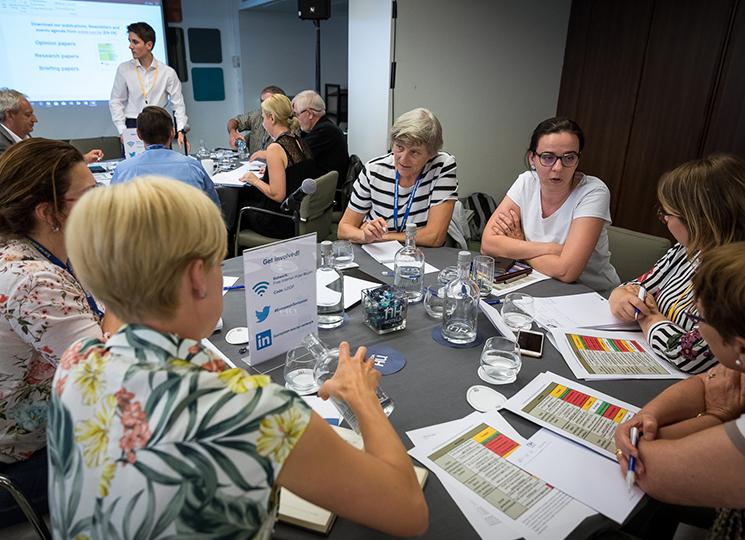
While buried in work at the local level, Reinhard is also an active member of the European Social Network because he understands that EU level will have more influence on the local level policymaking in the future years, therefore it is necessary to engage in European discussions on long-term care. More and more we become a European market with regards to Social questions, so it is important for the governments to look at what their European neighbours are doing about the same problems. For him, policy and practice group on long-term care organized by ESN is a forum to meet other European colleagues and exchange problems and solutions to better approach older people’s needs. Apart from being a platform for exchanging good practice experiences, ESN for him is also a very good link between local authorities and the European Commission.
If Europe is the future for development of social policy, what is the future for Reinhard? With a satisfactory smile on his face he says he will continue working in the same field for the next 10 years, and yes he would chose the same career if he could start all over again. The biggest shift he would allow would be to work in the field of younger people’s services and find projects to put the old and young generations together and work towards inter-generational integration, a choice after all not being too far from his current career. You see, the field of older people’s services is so vast that it always offers the space to find new projects to work on!