
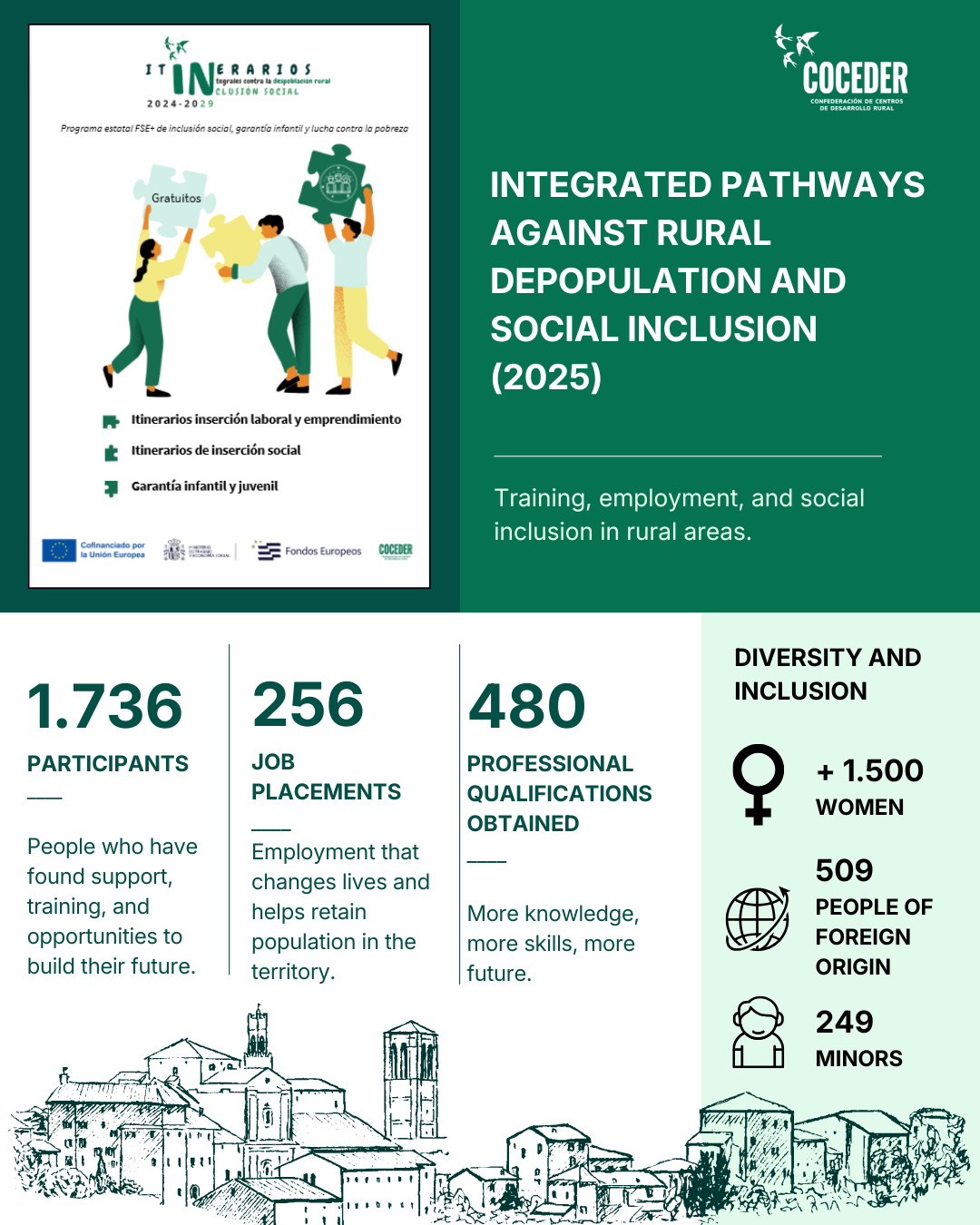
 When we talk about rural development, the focus is often on roads, housing, connectivity or infrastructure. These are essential investments, but there is another form of investment that also keeps villages and rural areas alive: that which is made with, by and for people and their communities. This is how the Confederation of Rural Development Centres (COCEDER) has understood rural development for over three decades: a holistic model that puts people at the centre and considers the strengthening of communities as crucial as economic growth, environmental sustainability, or the cultural life of the region.
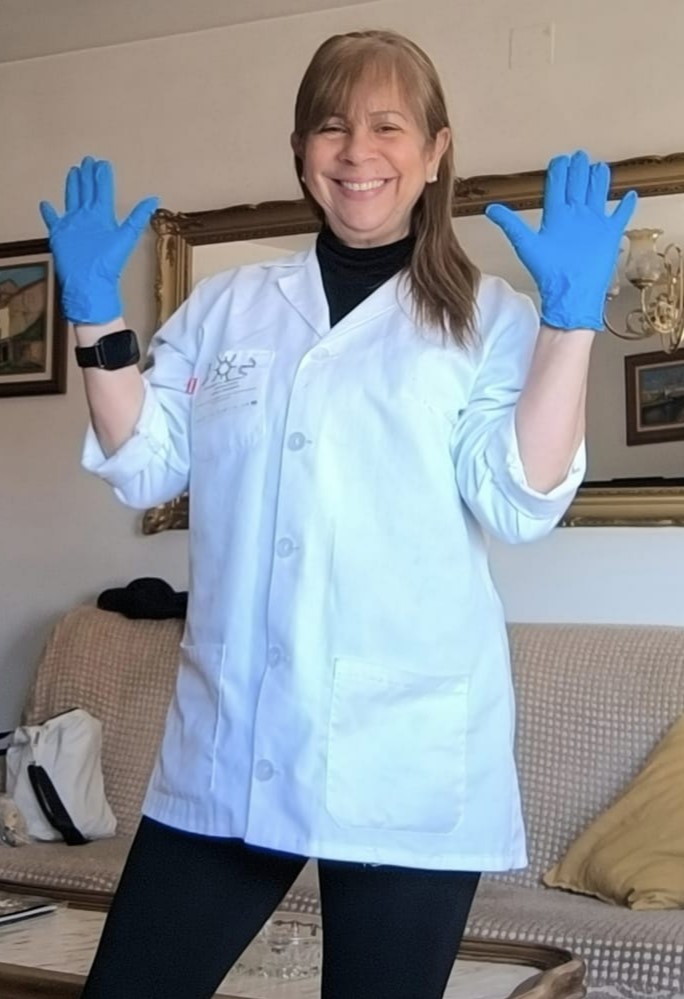
The stories of those who take part in COCEDER’s programmes confirm this. Yulia arrived in Spain from Venezuela and is following a social and labour market integration programme with the aim of building a new life for herself. “I’m really happy because we’ve already completed three levels; this course is a brilliant idea. The learning has been valuable and straightforward, very practical.” Sol found more than just a qualification in a social and healthcare training course: “I was going through a difficult time and the course opened the door to many experiences and positive things,” she says, now working as a home care assistant in her local area. Of everything she has learnt, she emphasises that “the most important thing of all is knowing how to care for an elderly person; and, more than physical care, the emotional aspect.”
The impact is also felt by families. Yuliet, a mother of two children taking part in a Child and Youth Guarantee programme, emphasises that “this programme is proving beneficial for my children, as it helps them both academically and in their personal and social development.” Sometimes the impact extends beyond those taking part: Federica and Eva met on an entrepreneurship programme and ended up organising a ‘Women’s Reconnection Gathering’ together. Where there is trust, projects and opportunities for the local area inevitably emerge.
Social organisations such as COCEDER complement the work of public authorities. They offer a local approach, thanks to the capacity for innovation and first-hand knowledge of the area, which enables a swift response to needs that require different solutions in each region.
Many of these initiatives are supported by EU funding, most notably the European Social Fund Plus (ESF+). Without them, many of these programmes would not reach the smallest villages.
ESN recently organised a Roundtable at the European Parliament, where it became clear from numerous interventions that social services need earmarked, accessible, and predictable investment. The European Commission’s proposal for the next Multiannual Financial Framework (MFF) for 2028–2034 risks weakening these achievements, as ESN has recently warned.
On 6 July, International Rural Development Day, these stories serve as a reminder: social investment means investing in regions with greater opportunities and greater cohesion. Because rural development is also built by investing in people.
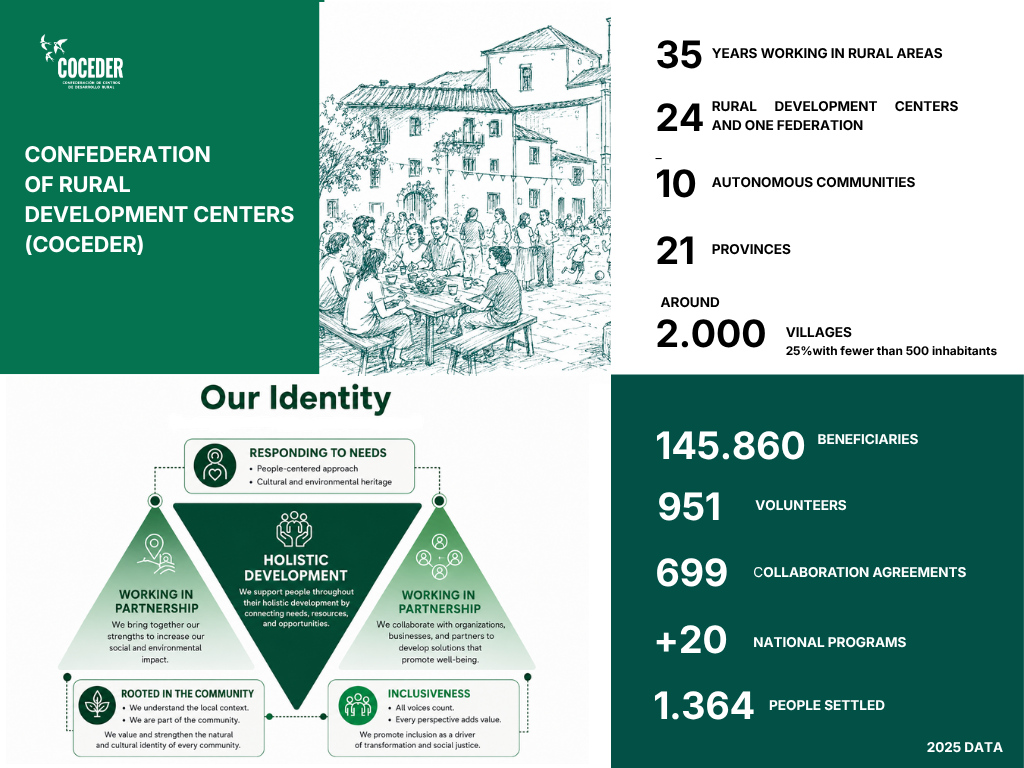
The Confederation of Rural Development Centres (COCEDER) has over 40 years of experience in social intervention in rural areas. The organisation is a reference in social services in the most depopulated territories of Spain, operating in more than 400 municipalities. COCEDER’s mission is to address the challenge of depopulation and its wide-ranging impacts in terms of unequal opportunities, access to social services, environmental issues, and health, among others.