

There are now 18 locations in Mazovia, Poland, where over 300 people in the early stages of dementia can access professional activities and therapies to improve their well-being. For the past six years, the Mazovia Region has not only maintained but also expanded its network of Day Care Centres (DDPs). The goal is to enhance the quality of life for seniors and their families.

The story of Day Care Centres in Mazovia began in 2020, when the Mazovian Voivodeship Government, together with the Masovian Social Policy Centre and regional NGOs, launched a pilot programme to create facilities offering specialised daytime therapy and support for people with dementia. Initially, six centres were established. From the start, the model focused on individuals in the early stages of the disease, aiming to support their independence, activity levels, and ability to function within the local community for as long as possible.
Today, the network comprises 18 Day Care Centres across Mazovia, serving over 300 people with dementia daily. While the total cost of developing and operating the network has exceeded 100 million PLN, evaluations to date have shown that the progression of the disease is often slowed and, in some cases, cognitive function even improves.
Daily activity and independence
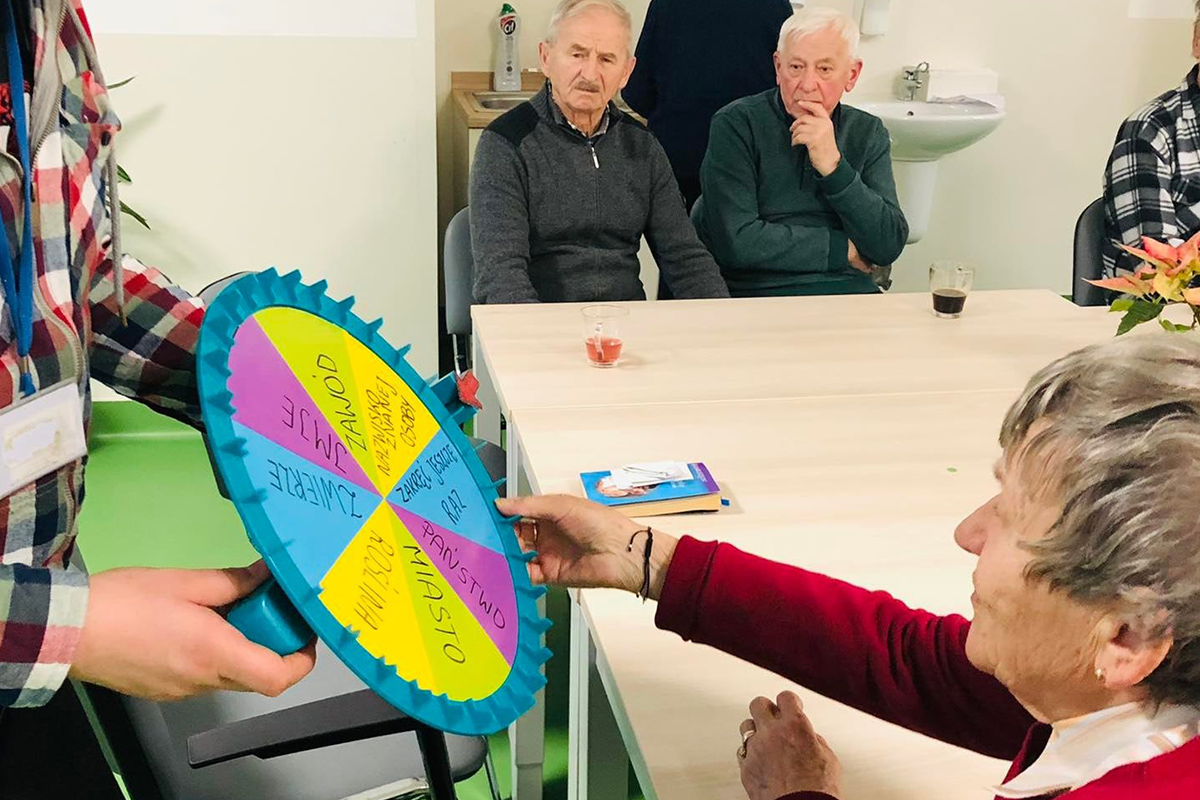
Each Day Care Centre can support a group of approximately 15–20 people, five days a week, for eight hours a day. During this time participants can benefit from a range of activities including occupational therapy, memory and cognitive training, social and daily living skills training, rehabilitation, physical activity, arts and crafts, music therapy, computer classes, gardening and dog therapy.
Family support
Attendees are provided with meals – sometimes prepared collaboratively – that are tailored to a specific diet designed to support the maintenance of cognitive function.
"From the outset, the Day Care Centre model was conceived as a social service offering multiple simultaneous benefits. As dementia progresses, the entire family is affected. Providing professional activities and therapies fosters positive changes in the patient, relieves the burden on the family and enables them to re-engage with social life"
Aleksander Kornatowski, Director of the Masovian Social Policy Centre
A key element of the Day Care Centre model is giving family members time for professional work, rest, family, and social life. Participating in scheduled activities establishes a consistent daily routine for individuals with dementia, while allowing them to continue living in their own homes. Families often note that their loved ones return home in a better mood than if they had spent the entire day at home without such activities.
“Operating a network of Day Care and Support Centres (DDPs)—whose mission involves not only caring for patients but also providing education on dementia—helps reduce the stigma surrounding the condition. Thirty-five percent of caregivers conceal their loved ones' diagnoses for fear of such a judgement. Our model incorporates an educational component: raising public awareness about neurodegenerative diseases and teaching people how to interact with those affected by them”
Elżbieta Bogucka-Lityńska, Deputy Director of the Masovian Social Policy Centre (MCPS)
The Centre for Social Policy in Mazovia (Poland) is responsible for the development and implementation of studies in themes related to social policy, including social services financing, organisation of social support, analysis of the social and demographic situation in local municipalities. Other responsibities include the development of joint programmes with public administrations and professional associations.