
Every year, World Homeless Day reminds us that homelessness remains one of Europe’s most persistent social challenges. Yet homelessness is far more than rough sleeping or the use of emergency shelters. Across Europe, many people experience insecure housing, temporary accommodation, or unsuitable living conditions that often remain invisible in official statistics. Understanding the full extent of housing exclusion is the first step towards addressing it effectively.
Over the past decade, European policy has increasingly shifted from managing homelessness to preventing it. The establishment of the European Platform on Combatting Homelessness (EPOCH) reflects a shared commitment among Member States to develop integrated responses that combine housing, social services, healthcare and employment support. At the heart of this approach lies a simple principle: effective policies require reliable evidence.
This lesson is particularly relevant for Latvia. A recent comprehensive national assessment of homelessness policies, support systems, and measurement approaches found that better data is essential for developing more effective responses. Without a clear understanding of who experiences homelessness, where support gaps exist and which interventions deliver results, it is difficult to design policies that prevent people from losing their homes or help them regain housing stability.
Like many countries, Latvia has traditionally relied on information gathered through shelters, social services and other administrative systems. While valuable, these sources capture only part of the picture. European experience shows that homelessness includes a much broader range of situations. The European Typology of Homelessness and Housing Exclusion (ETHOS) Framework, increasingly used across Europe, highlights categories such as temporary accommodation, insecure housing, and inadequate living conditions, helping policymakers identify forms of homelessness that often remain hidden.
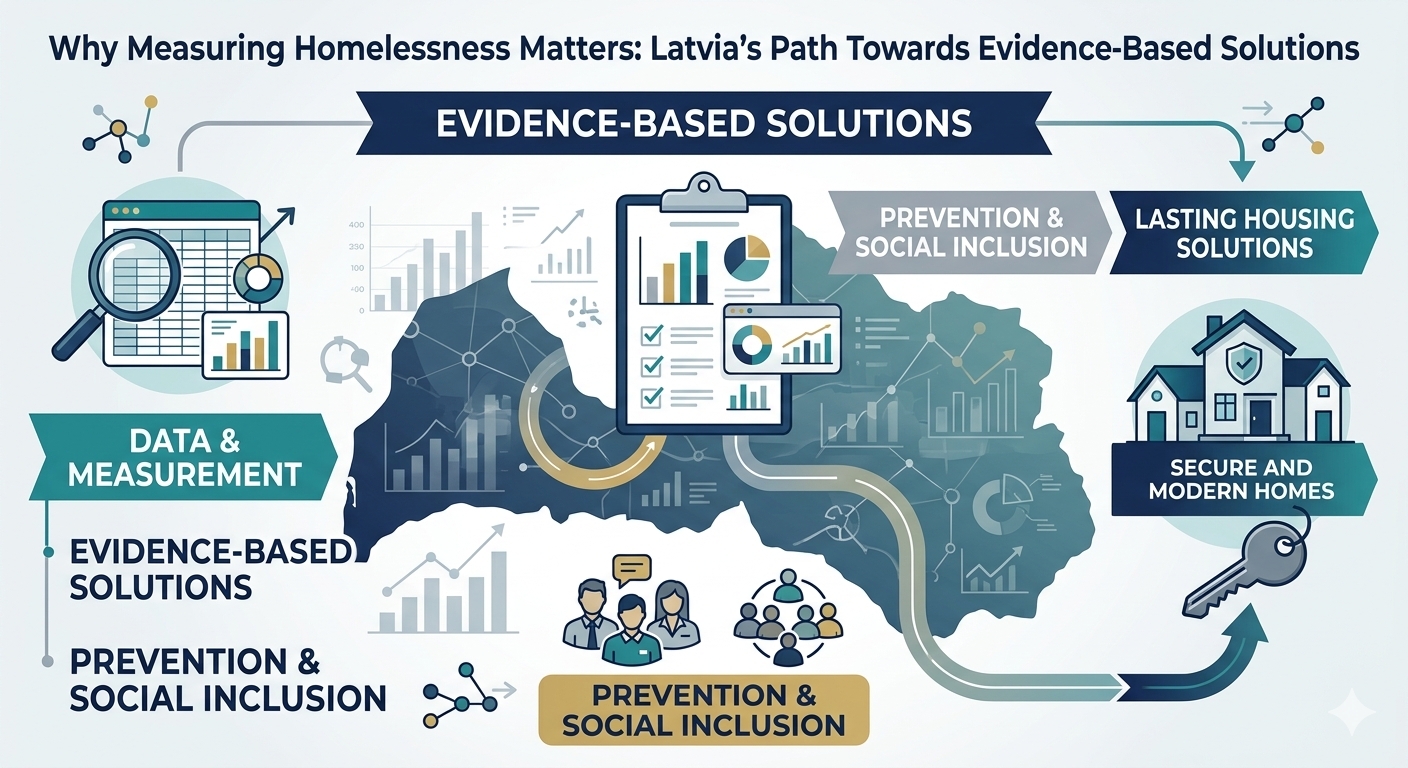
The assessment concluded that developing a national homelessness measurement system should be a strategic priority. International practice demonstrates that no single data source can fully capture the complexity of homelessness. Administrative data, local authority records, surveys and point-in-time counts each provide different insights. When combined, these sources offer a more comprehensive understanding of both immediate needs and longer-term trends.
Improved measurement is not simply about producing better statistics. It is about improving decision-making. Better data enables governments and municipalities to identify emerging risks, target resources more effectively, and assess whether policies are achieving their intended outcomes. It also supports a shift towards prevention by helping services identify people at risk before homelessness becomes chronic.
The Latvian experience reinforces a lesson increasingly recognised across Europe: prevention must be at the centre of homelessness policy. Housing affordability challenges, poverty, health problems, unemployment, family breakdown, and transitions from institutional care can all contribute to housing instability. Addressing these risks requires coordinated action across sectors and timely support for vulnerable individuals and families. Latvia’s legal framework for social services and social assistance already provides an important foundation for this work by defining responsibilities for supporting people facing social exclusion and housing-related risks.
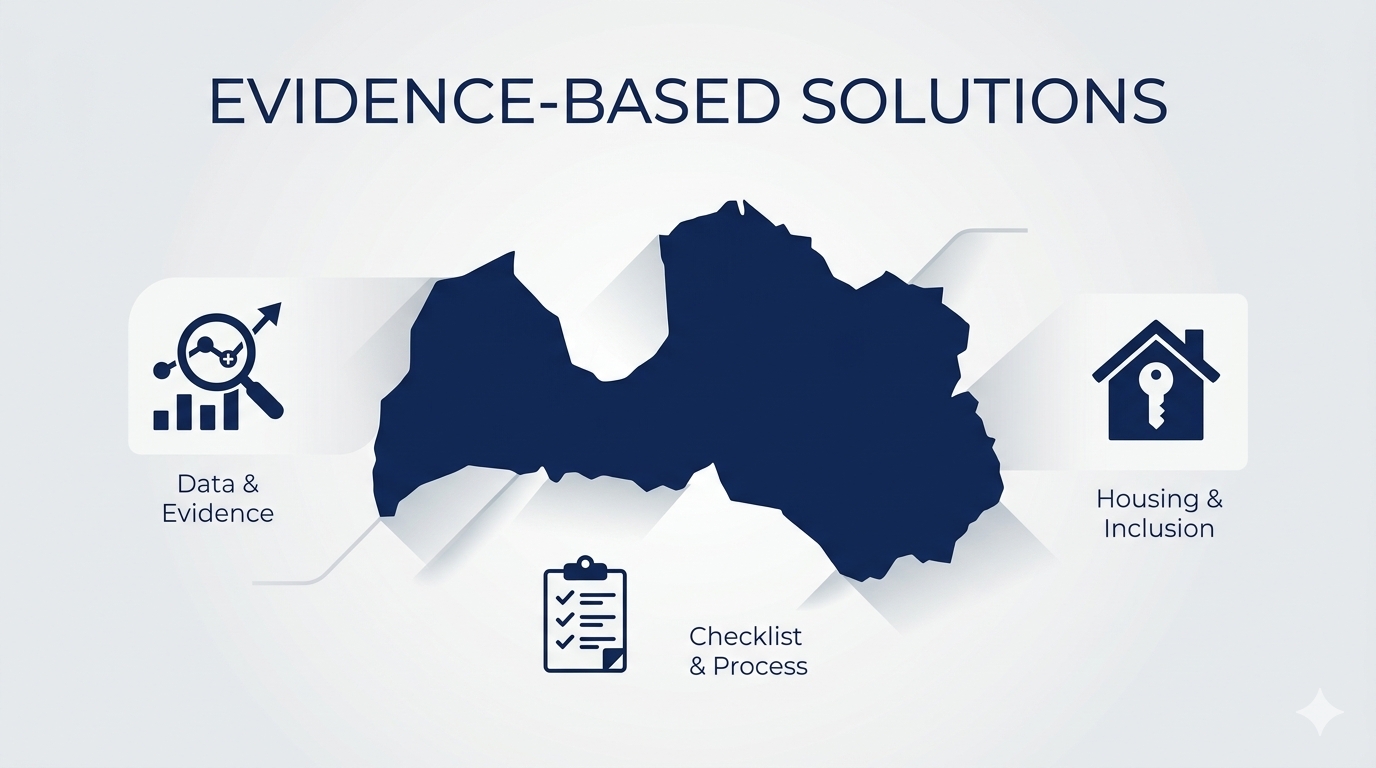
The assessment also highlights the growing importance of housing-led approaches. Across Europe, models such as Housing First have demonstrated that stable housing should be viewed not as the end point of support, but as its starting point. Secure housing creates the conditions needed for people to improve their health, strengthen social connections and participate more fully in society.
For Latvia, the development of a national homelessness measurement system would represent more than an improvement in data collection. It would strengthen cooperation between institutions, support evidence-informed policymaking, and enable closer alignment with European efforts to reduce homelessness through shared learning and comparable data.
Looking ahead, the next challenge is not only to improve how homelessness is measured, but how evidence is translated into coordinated action. Better data should ultimately lead to better outcomes for people experiencing homelessness and those at risk of losing their home. As Europe continues to pursue the ambitions of EPOCH, investing in better evidence is not an end in itself; it is a means of building more effective prevention, stronger social inclusion and lasting solutions for some of society’s most vulnerable citizens.
The Ministry of Welfare of the Republic of Latvia is the leading institution of the state administration in the areas of labour, social security, children's and family rights as well as equal rights for people with disability and gender equality. Its mission is to stabilize the condition of a person in the situations of social risk, facilitating legal labour relationships, healthy and safe work conditions, and gender equality.