
Europe’s social services are being tested from every direction. Ageing populations, several ongoing crises, migration pressures, workforce shortages, and rising inequalities are forcing governments to confront an uncomfortable reality: many welfare systems were not built for the complexity of today’s challenges.
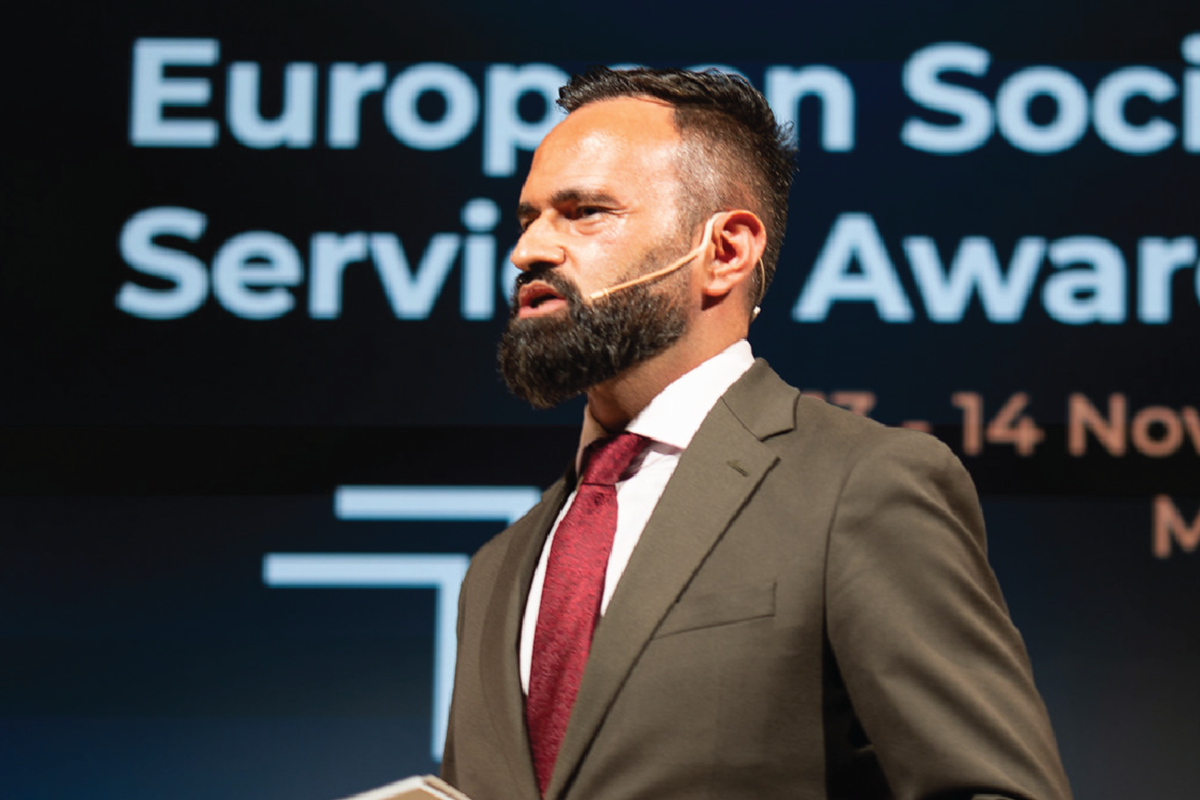
This is precisely why the message emerging from the 34th edition of the European Social Services Conference (ESSC) feels so timely. The 2026 conference, organised by the European Social Network in Valletta, Malta, was attended by almost 1,000 delegates from 40 countries, and centred on one ambitious idea: ‘Building Bridges across international social services’. Beneath this overarching theme, lie three concrete pillars that define the future of European welfare systems: how social services are designed, how they are delivered, and how they are financed.
Design
The first pillar — social services design — may be the most important. Good design is not about bureaucracy or administration; it is about whether services respond to people’s needs. Throughout the conference it became clear that Europe should move away from reactive welfare models and toward systems based on prevention, early intervention, cooperation, and participation. For Rosa Martinez, deputy minister for social rights in Spain, this means that social services should be considered the fourth pillar of the welfare state together with pensions, education, and healthcare. For Sir Michael Marmot, UCL professor and world figure on the social determinants of health, it is key that equity of health and social wellbeing are at the heart of policy-making.
Rather than seeing people and families as support recipients, programmes presented throughout the conference positioned them as active partners in shaping their support plans. This may sound like common sense, but it represents a radical redesign of traditional welfare systems since too often services are designed around institutional convenience rather than people’s needs.
Deliver
This links well with the second pillar of social services delivery, which addresses how social services work in practice. The ESSC 2026 strongly emphasised integrated and community-based approaches to provide coordinated care and support at a time of rising demand and workforce shortages. Speaking about the community projects he is running in eastern Spain, Daniel Millor emphasised the role of the neighbourhood: “We are changing the way the neighbourhood is viewed and involved -from a sense of depression to one of hope”.
Across most programmes we learnt about, public services, providers and community organisations were working together to provide support based on continuity and transforming relationships utilising new digital tools. Yet, these models recognise that effective delivery is not just about efficiency but also about human connection. And perhaps the real challenge for Europe is not just about expanding services, but redesigning them around dignity, trust and accessibility.
Finance
The third pillar — social services financing — may ultimately be the most politically difficult. Designing ambitious welfare systems is relatively easy compared to funding them sustainably, particularly in periods of economic uncertainty.
At the ESSC, speakers openly acknowledged these pressures. According to OECD’s Herwig Immervoll, “financing provisions are hard and politically costly to change”, while “countries may underestimate the demand for services”, explained World Bank’s Cassandra Simons. Yet the conference also challenged the idea that social spending should merely be viewed as a cost. “You invest in social services” underlined Malta’s social policy minister Michael Falzon. Along the same lines, Karina Batthyany, Uruguay’s University of the Republic, argued that “care is not a cost to minimise, but the foundation upon which all other welfare and social services are built”.
Too often, political systems reward short-term savings rather than long-term outcomes. Preventing homelessness, family breakdown, or institutionalisation may reduce costs dramatically over time, but those benefits rarely fit neatly within short-term political cycles.
The ESSC 2026 took place at a crucial moment for Europe. As debates continue around the future EU budget, financing priorities, and social investment, the conference theme helped us to rethink what sustainable welfare actually means.
Ultimately, the three pillars of the ESSC 2026 — design, delivery, and financing — are deeply interconnected. Poorly designed systems lead to fragmented delivery. Weak financing undermines implementation. Ineffective delivery erodes public trust.
The conference’s central message is that building stronger social services requires rethinking how they are designed, improving how they are delivered, and securing financing models that combine innovation with long-term social investment.
At a time when Europe often feels politically divided and socially strained, that may be the most important bridge the ESSC is trying to build.