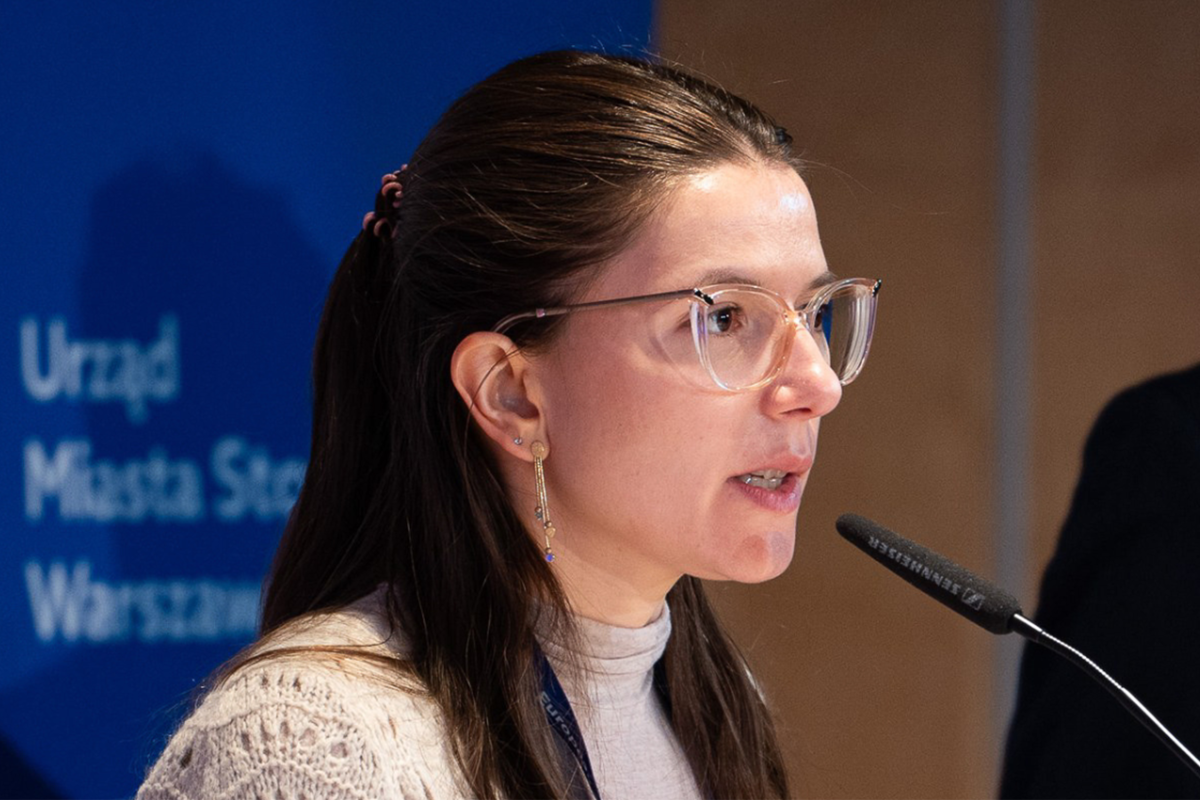
Every child has the right to grow up in a safe, nurturing environment where they can develop their full potential. The experiences children have during childhood shape not only their immediate wellbeing, but also their opportunities and outcomes later in life. As Akiko Awa, researcher at the International Child and Family Social Work Research Hub in Japan, highlighted during the 34th edition of the European Social Services Conference (ESSC): “If children flourish, they will become adults who flourish, leading to a better society.”
Awa’s presentation was one of many contributions that enriched this year’s Conference with practical examples of family support from across Europe. Together, these examples emphasised the importance of investing in prevention, identifying needs at an early stage, and ensuring sustained support throughout the different stages of a child’s and family’s journey.
Achieving this requires integrated, family-centred approaches that combine universal prevention with tailored interventions, bringing together professionals, communities, and policymakers around a shared commitment to children’s rights and wellbeing. By ensuring that services are accessible, coordinated, and responsive to families’ realities, we can create the conditions for every child to thrive.
Investing in families during pregnancy and early childhood
“Inequality starts before birth. If we want equal chances, we need to organise support earlier, closer, and in a more integrated way”.
This powerful message framed the presentation of Baby on the Way, a support system launched in the Belgian City of Genk in 2017. Built on the understanding that the first 1,000 days of a child’s life are decisive for lifelong health and development, this initiative aims to ensure that every child has the best possible start, regardless of their family’s circumstances. Its approach follows the principle of subsidiarity, relying on universal services while mobilising more specialised support whenever additional needs are identified, such as in cases of teen pregnancies.
Twice a year, the programme offers a seven-week course for expectant parents. Alongside practical information on pregnancy, childbirth, nutrition, infant care, social rights, and available local services, the course creates valuable opportunities for early risk detection and for families to establish trusting relationships with professionals. This preventive approach is complemented by an access line that parents, professionals, and community members can contact by phone or email, providing a low-threshold entry point to coordinated multidisciplinary support for families in vulnerable situations.
Preserving families through in-home support
The importance of strengthening support for parents was echoed in the presentation of findings from a four-year study of Action Éducative en Milieu Ouvert (AEMO), France’s court-mandated in-home support service for children living in high-risk situations. Rather than removing children from their families, AEMO seeks to protect them within their home environment whenever this can be achieved safely. Multidisciplinary teams work directly with parents and children to strengthen parenting capacities and ensure that children's fundamental needs, including health, education, safety, and emotional wellbeing, are met.
The study, conducted by the International Child and Family Social Work Research Hub, found encouraging outcomes for children: 68% demonstrated measurable improvements, even where support remained ongoing. However, progress among parents proved significantly more limited. After four years, only 21% showed positive change, with many continuing to face chronic challenges, such as couple conflict and difficulties respecting children’s rights. These findings underline a structural gap: parental support remains insufficient, and collaboration with external services dedicated to adult or family support is not yet robust enough to address entrenched parental hardship.
Strengthening families by addressing systemic and intergenerational vulnerabilities
Some of the adversities faced by children and families are shaped by factors that extend beyond individual or family circumstances, including poverty, social exclusion, unequal access to services, and the effects of trauma. Addressing these challenges requires interventions that recognise and respond to both systemic barriers and intergenerational vulnerabilities.
In the German region of Eastern Württemberg, Aktion Jugendberufshilfe in Ostwürttemberg (AJO) e.V. has developed Mogly 2.0, a project supporting children and young people with migrant or refugee backgrounds who, alongside the constraints of living in a predominantly rural area, such as limited transport and social isolation, frequently encounter language barriers and the lasting effects of traumatic experiences. In collaboration with local services and partners, Mogly 2.0 provides intercultural, multilingual, and gender-sensitive socio-educational support to strengthen life prospects. Speaking about one of the children supported through the initiative, a 12-year-old from Ukraine, Petra Walter, Executive Director of AJO e.V., stated: “Targeted and holistic support helped stabilise the family situation and opened up new academic and social perspectives for the boy”.
Rebuilding family relationships after separation
Separating children from their families can create difficulties. However, even when separation becomes necessary, opportunities remain to rebuild relationships and promote positive outcomes. Filipe Saramago, Director of the Alvalade Capacity Centre in Portugal, presented the Centre’s integrated model for working with children in alternative care and their families of origin.
Delivered by a multidisciplinary team, the approach pursues two complementary objectives. The first is to strengthen parental skills, family relationships, and internal family resources so that parents can become more autonomous and better equipped to respond to their children's needs. The second is to facilitate the re-establishment of safe, positive, and meaningful relationships between children and their biological families whenever this is in the child's best interests.
Even when children cannot remain with their families, maintaining and restoring safe, stable, and meaningful relationships remains essential. These relationships play a fundamental role in shaping children’s sense of identity and belonging.
In the longer term, strengthening family relationships can help break cycles of disadvantage and create the conditions for future generations to flourish, a conclusion clearly illustrated at ESSC 2026.