Across Europe, unaccompanied migrant children continue to face barriers to housing, education, employment, and stable support during their transition to adulthood. While national systems differ, local authorities, civil society organisations, and practitioners increasingly recognise that these challenges require cooperation, practical solutions, and a shared commitment to inclusion.
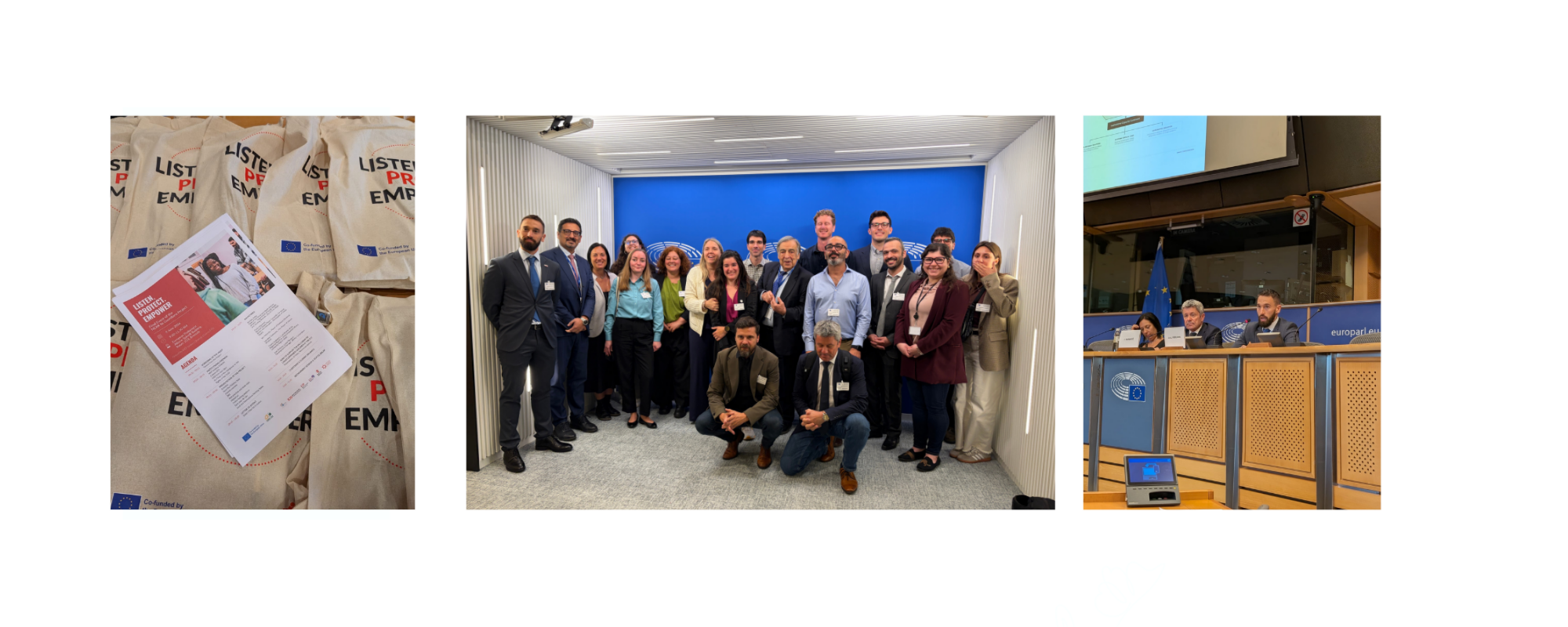
These principles were at the centre of the final event of the NEAR to Guardians Project, hosted at the European Parliament in Brussels this month. Bringing together representatives from European institutions, municipalities, social services, and civil society organisations, the event marked the culmination of 30 months of collaboration across Belgium, Greece, Italy, Slovenia, and Spain.
The event opened with institutional remarks from MEP Leoluca Orlando, from the Greens, followed by the screening of Voices from the Project, a video highlighting experiences gathered throughout the project. Discussions focused on a central message: unaccompanied children are not simply recipients of support, but young people whose rights, aspirations, and potential must be at the heart of European and local responses.
Learning from practice
NEAR to Guardians sought to strengthen guardianship systems and improve inclusion pathways through networking, knowledge sharing, and mutual learning.
Through desk research, interviews, focus groups, consultations with young people, and national and transnational study visits, partners explored how different initiatives support children in accessing education, housing, and employment.
The findings revealed common challenges across Europe. Unaccompanied children often experience fragmented support pathways, instability during their transition to adulthood, and barriers to accessing essential services. At the same time, the project identified promising approaches, including legal and administrative support services, language learning and cultural mediation initiatives, transitional housing projects, and partnerships connecting social services, educators, employers, and communities. Young people also repeatedly stressed the importance of being listened to and involved in decisions affecting their lives.
Turning local realities into European commitments
Another major achievement of the project was the development of local and international Working Tables, which brought together municipalities, civil society organisations, and experts to identify challenges and co-create solutions around education, housing, and labour market inclusion.
This bottom-up process culminated in the presentation of the Letter of Intent for Inclusion and the launch of the Sister Cities for Inclusion Network. During the roundtable discussion, representatives from the City of Turin, Italy, the Municipality of Lleida, Spain, the Municipality of Postojna, Slovenia, the Municipality of Lesvos, Greece, the Lombardy Region, Italy, and SAMU Corporation, Spain, reflected on the role of local authorities in translating rights into practical support and highlighted common challenges, including access to housing and employment, administrative barriers, and the transition to adulthood.
The event also featured the presentation of policy recommendations aimed at supporting the inclusion of unaccompanied children across the European Union and strengthening long-term protection systems. Among else, the recommendations highlight the need to put the children in the centre of policy formulation, and to establish rapid, reliable age assessment and identification procedures that respect children’s rights.
Delivering lasting impact
Beyond creating spaces for dialogue and exchange, NEAR to Guardians has delivered concrete outcomes that will continue beyond the project's lifetime.
The project's free Online Training Platform has already attracted more than 500 enrolled learners across Europe, demonstrating the need for practical and accessible guidance for guardians and practitioners working alongside unaccompanied migrant children.
Another significant achievement has been the establishment of the Sister Cities for Inclusion Network, which already brings together organisations and municipalities such as SAMU, the Vienna City Council, the Municipality of Fyli, and other members of the European Social Network (ESN). By creating a platform for ongoing peer learning and cooperation, the network ensures that the knowledge and partnerships developed through NEAR to Guardians will continue to evolve beyond the project's formal duration.
At ESN, we believe that innovation in social services emerges when evidence, practice, and policy come together. NEAR to Guardians has demonstrated the value of connecting local experiences with European cooperation to strengthen guardianship systems and create more inclusive pathways for unaccompanied migrant children.