
Recommendation
Italy should develop a coordination mechanism between national, regional, and local authorities to ensure that the nationally defined Essential Levels of Social Assistance are matched by adequate and sustainable resources at territorial level.
Social Services Legislation
Right to access social services
People’s right to access social services is recognised in national legislation. The Constitution of the Italian Republic establishes equality and the right to social support for people unable to work and without sufficient means, and Law 328/2000 establishes an integrated system of social services and the right of individuals and families to access quality social services promoting autonomy, inclusion, and dignity.
Specific legislation further establishes rights of people with disabilities (Law 18/2009), people experiencing poverty (Legislative Decree 48/2023), and older people with care needs (Legislative Decree 29/2024)
Definition of social services
Article 128 of Legislative Decree 112/1998 defines social services as activities and benefits aimed at overcoming situations of need and hardship, excluding those covered by social security, health care, and justice systems. Furthermore, Article 22 of Law 328/2000 establishes Essential Levels of Social Assistance (Livelli Essenziali delle Prestazioni Sociali – LEPS), which all Social Territorial Areas must guarantee.
National social services catalogue
Italy does not have a publicly accessible national social services catalogue.
The national Information System for the Provision of Social Services (Sistema Informativo dell’Offerta dei Servizi Sociali – SIOSS), managed by the Ministry of Labour and Social Policies, collects information on social services, including workforce, across five main areas, but is not publicly accessible. Information on available services and access pathways is instead generally provided through municipal websites, such as those of Bologna, Rome, and Bari. The Ministry of Labour and Social Policies and the National Institution for Social Security websites provide a catalogue of access to specific national measures, such as those concerning poverty.
National social services strategic plan
The National Social Interventions and Services Plan 2024-2026 provides the national strategic framework for social services. It covers services for children, adolescents, and families, people with disabilities, older people, adults experiencing hardship or social exclusion, income support and social inclusion, while also addressing workforce development, digitalisation, integrated services, deinstitutionalisation, domestic violence, homelessness, and social innovation.
This plan is accompanied by a dedicated budget for its implementation, primarily funded through regional, national, and European sources, including the National Fund for Social Policies, the Poverty Fund, the Long-Term Care Fund, the National Fund for Childhood and Adolescence, the European Social Fund Plus (ESF+), and Italy’s National Recovery and Resilience Plan.
The plan is then further integrated by other national strategic plans such as the National Plan for Non-Self-Sufficiency 2025-2027 and the National Social Inclusion and Anti-Poverty Programme 2021-2027.
Responsibilities for social services
Law 328/2000 establishes a multi-level system of social services governance.
The national government defines strategic priorities, legislation, LEPS, national funding, and monitoring arrangements.
Regions develop regional social plans (Piani Sociali Regionali), set service standards and accreditation requirements, contribute to service financing, and oversee implementation.
Municipalities and Social Territorial Areas (Ambiti Territoriali Sociali – ATS: institutional arrangements for joint management between municipalities) assess local needs, implement local plans (Piani di Zona), organise and manage local services, manage access points (e.g., Segretariati Sociali), case management, and personalised care plans, and coordinate with health, education, employment, and third sector organisations.
The third sector also plays an important role in service provision and co-design, under Legislative Decree 117/2017.
Social Services Financing
As of 1 January 2025, Italy's population was 58,943,464 people (Source: Eurostat).
In 2025, the country’s gross domestic product (at market prices) reached €2,258,048.7 million (Source: Eurostat).
The 2025 Budget Law allocated €10,451,083,000 across 25 social welfare funds, with most resources going to the fight against poverty (71.2%), followed by interventions in the disability sphere (11%)(Source: welforum.it).
In 2022, municipalities invested €10.9 billion in social and socio-educational services:
- €1.2 billion was reimbursed by the national health service.
- €812 million came from user contributions.
Municipalities’ 2022 net expenditure of €8.9 billion was distributed as follows:
- Families and children: 37.3%.
- People with disabilities: 27.5%.
- Older people: 14.8%.
- Poverty and hardship among adults: 9%.
- General and multi-user services: 6%
- Migrants: 5.1%.
- Substance abuse: 0.3% (Source: Istat).
Social Services Coverage and Policies
Social Services Workforce
Social work is a regulated profession in Italy, under Law 84/1993. Social workers must hold a recognised university degree, pass the state professional examination, and register with the National Register of Social Workers (Albo Professionale degli Assistenti Sociali).
As of 30 September 2025, 47,893 social workers were registered with the National Register of Social Workers (Source: CNOAS).
In 2025, 12,245.19 FTE social workers were permanently employed in specific public social services, counting toward the LEPS target of one social worker per 5,000 inhabitants (Source: Ministry of Labour and Social Policies). This figure excludes social workers employed by the non-profit social sector who may work in the same services, as well as public-sector social workers employed by other bodies, such as the health care sector.
Long-term Care for Older People
As of 1 January 2025, 24.7% of the population, or 14,579,867 people, were aged 65 and over (Source: Eurostat).
In 2025, 39% of the population aged 65+ reported some or severe self-perceived long-standing activity limitation (Source: Eurostat).
Residential care facilities
As of 1 January 2024, there were 12,987 residential social and socio-medical care facilities for people of all ages, with 425,780 places. Of these, 315,898 places were for older people:
- 50,239 for self-sufficient older people.
- 265,659 for non-self-sufficient older people.
These residential care facilities were operated by:
- Non-profit organisations: 45%.
- Private entities: 25%.
- Public entities: 18%.
- Religious organisations: 12%.
At that time, there were 385,871 residents, including 291,392 people aged 65+, of whom nearly 239,000 were non-self-sufficient (Source: Istat).
Day care
In 2022, municipalities provided day care to the following number of people aged 65+:
- Day care centres: 31,810.
- Community/social centres: 158,585.
- Other: 12,473 (Source: ISTAT).
Home care and telecare
Home support for older people and people with disabilities is provided through Integrated Home Care (Assistenza Domiciliare Integrata – ADI), delivered by the National Health Service and focused primarily on short-term, acute health care needs, and Home Care Service (Servizio di Assistenza Domiciliare – SAD), provided by municipalities for longer-term social care needs.
In 2025, 1,625,785 people aged 65+ received health home care (ADI)(Source: Ministry of Health).
In 2022, municipalities provided home care to the following number of people aged 65+:
- Social home care (SAD): 134,234.
- SAD integrated with ADI: 77,401.
- Community-based services (buonvicinato): 11,849.
- Telecare and remote assistance: 20,032.
- Vouchers, care allowances, social and health care vouchers: 50,875.
- Home meal delivery and/or laundry service: 38,805.
- Other: 18,610 (Source: ISTAT).
The average number of hours of home care provided per year is estimated to be:
- ADI: 15 hours/year (14 hours/year for older people)(2023 data).
- SAD: 98 hours/year (2021 data).
- ADI + SAD: 113 (Source: I Luoghi della Cura).
Personal assistance
Personal assistance for older people and people with disabilities is partly included in the home care services mentioned above and is also provided by family caregivers or personal assistants (badanti), who help with everyday activities and maintaining an acceptable quality of life.
In 2019, there were an estimated 7 million family caregivers, though it is unclear how many assisted older family members (Source: CNEL).
In 2024, there were an estimated 1,032,903 personal assistants, both with and without regular work contracts, though it is unclear how many assisted older people (Source: Bocconi University).
In 2025, 412,863 personal assistants contributed to the social security system (Source: INPS). This number refers to personal assistants hired with regular contracts.
Reforms
Under Legislative Decree 29/2024, a Universal Benefit (Prestazione Universale) is being piloted in 2025-2026 for people aged 80+ with very severe care needs to support personal assistance and other non-medical home care.
Under Legislative Decree 93/2025, the implementation of the unified multidimensional assessment (valutazione multidimensionale unificata), targeting older people and their families, has been postponed from January 2026 to January 2027.
Strategies
The National Plan for Non-Self-Sufficiency 2025-2027 is Italy’s strategic framework for long-term care for older people and people with disabilities.
Long-term Care for Adults with Disabilities
In 2025, 7.8% of the population aged 16-64 reported some or severe self-perceived long-standing activity limitation (Source: Eurostat).
Residential care
As of 1 January 2024, there were 12,987 residential social and socio-medical care facilities for people of all ages, with 425,780 places. Of these, 32,516 places were specifically for people with disabilities and 20,835 for people with psychiatric conditions.
At that time, there were 385,871 residents, including 72,496 people aged 18-64, of whom about 50,480 had disabilities (including psychiatric conditions)(Source: Istat).
Day care
In 2022, municipalities provided day care to the following number of people with disabilities under 65:
- Day care centres: 25,750.
- Summer day care centres: 2,311.
- Play centres and workshops: 5,138.
- Other: 2,185 (Source: ISTAT).
Home care and telecare
In 2023, an estimated 400,000 people under 65 received ADI (Source: OECD).
In 2022, municipalities provided home care to the following number of people with disabilities under 65:
- SAD: 55,034.
- SAD integrated with ADI: 15,271.
- Community-based services (buonvicinato): 354.
- Telecare and remote assistance: 1,765.
- Vouchers, care allowances, social and health care vouchers: 36,941.
- Home meal delivery and/or laundry service: 1,896.
- Other: 6,279 (Source: ISTAT).
Personal assistance
In 2019, there were an estimated 7 million family caregivers, though it is unclear how many assisted family members with disabilities (Source: CNEL).
In 2024, there were an estimated 1,032,903 personal assistants, both with and without regular work contracts, though it is unclear how many assisted people with disabilities (Source: Bocconi University).
In 2025, 412,863 personal assistants contributed to the social security system (Source: INPS). This number refers to personal assistants hired with regular contracts.
Reforms
Legislative Decree 62/2024 introduced a simplified disability assessment (valutazione di base) and a participatory multidimensional assessment supporting personalised life plans (valutazione multidimensionale). Implementation began experimentally in selected provinces in January 2025, with progressive national rollout planned (Source: INPS).
Strategies
The National Action Plan for the Promotion of Rights and Inclusion of People with Disabilities, published in May 2026, addresses accessibility, health and wellbeing, labour inclusion, education, personalised life planning, inclusive security, and monitoring of disability policies.
Child Protection
In 2025, Fondazione SOS Il Telefono Azzurro managed:
- 2,186 cases within the 19696 helpline, dedicated to listening to children, young people, and adults in need of advice.
- 3,446 cases within the 114 helpline, dedicated to those who want to report a child or young person at risk.
- 46 cases within the 116000 helpline, dedicated to missing children.
- 3,022 reports of inappropriate or dangerous online material (Source: Fondazione SOS Il Telefono Azzurro).
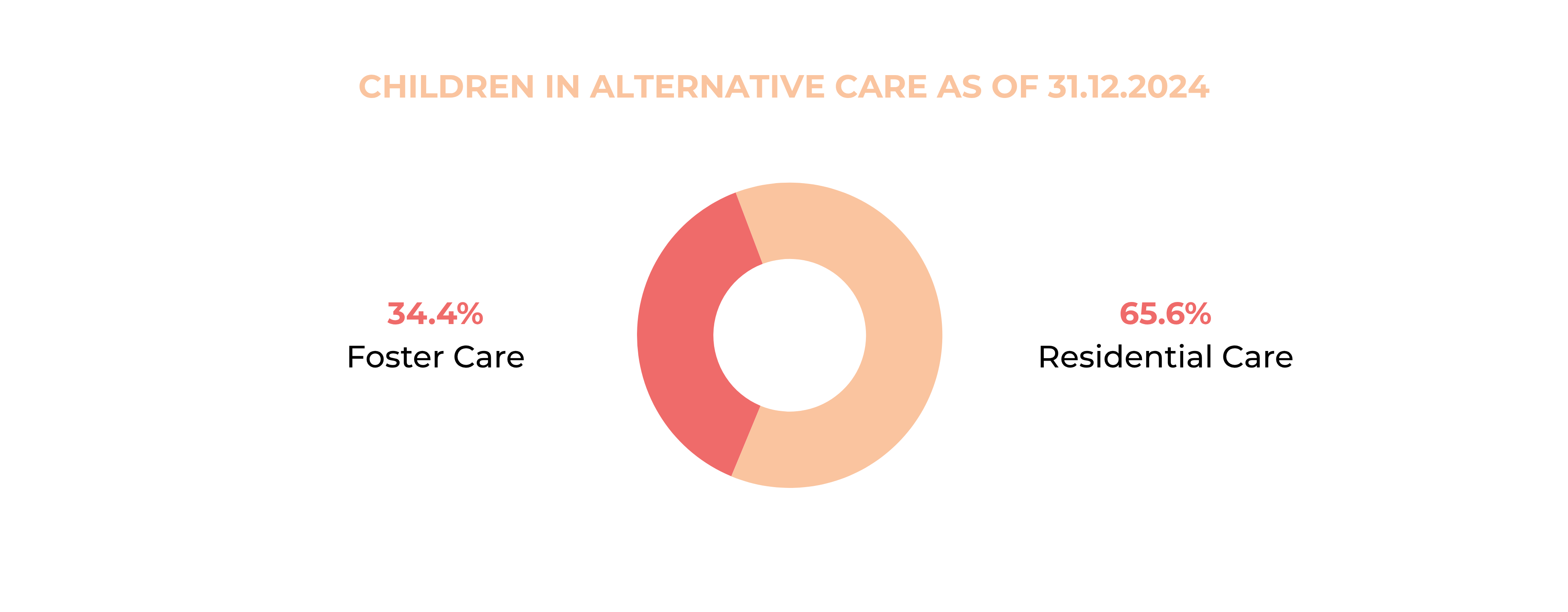
As of 31 December 2024, 345,083 children were involved with their local social services and 46,107 children were placed in alternative care. Of these:
- 15,870 were in foster care.
- 30,237 were in residential care (Source: Ministry of Labour and Social Policies).
Reforms
Law 37/2026, in force from April 2026, established a national system to register and monitor foster care placements, with strengthened assessment, oversight, and judicial responsibilities.
Strategies
The 6th National Action and Intervention Plan for the Protection of Rights and Development of Young People 2025-2027 foresees 16 actions covering parenting, education, and health.
Closely aligned with this plan is the National Plan for the Prevention and Countering of Child Sexual Abuse and Exploitation 2025-2027, Italy’s national framework for preventing, detecting, and responding to child sexual abuse and exploitation.
Domestic Violence Support
Women experiencing domestic violence
In 2025, about 6.4 million Italian women aged 16-75 reported having experienced at least one episode of physical or sexual violence during their lifetime (after turning 16). Of the women who reported having or having had a partner, 12.6% reported having experienced physical or sexual violence within intimate relationships, 17.9% reported psychological violence, and 6.6% reported economic violence (Source: Istat).
Domestic violence support services
Between January and March 2025, the national 1522 helpline, dedicated to victims of gender-based violence and stalking, received 14,011 valid calls concerning 3,516 victims, 3,163 of whom were female and 39 were under 18 years of age. The perpetrator identified by the victims was predominantly a current partner (49.7%), followed by a former partner (21.6%) and a family member (10.7%)(Source: Istat).
In 2024, there were 409 women’s crisis centres (Centri Antiviolenza), with 364 centres reporting requests for support from 61,370 women. 36,408 women began a pathway out of violence with their support (Source: Istat).
Emergency accommodation centres
In 2022, municipalities welcomed 3,867 victims of gender-based violence into shelters (case rifugio)(Source: ISTAT).
As of 1 January 2024, there were 12,987 residential social and socio-medical care facilities for people of all ages, with 425,780 places. Of these, 915 places were specifically for victims of gender-based violence.
At that time, there were 385,871 residents, including 667 women victims of violence (Source: Istat).
Reforms
Law 181/2025 introduced the criminal offence of femicide, defined as the killing of a woman motivated by hatred, discrimination, domination, control, or possession because she is a woman, or in connection with her refusal to establish or maintain an intimate relationship. The offence is punishable by life imprisonment.
Strategies
The National Strategic Plan on Violence against Women and Domestic Violence 2025-2027 is a multi-year strategic framework aimed at providing homogeneous responses across the national territory, articulated along strategic axes that include prevention, protection, punishment, and support for victims. It is accompanied by an Operational Framework.
Minimum Income Support
In Italy, there are two types of minimum income support:
- Inclusion Allowance (Assegno di Inclusione): a means-tested monthly allowance that supports households with children, older people, people with disabilities, and specific disadvantages. Beneficiaries subscribe to a tailor-made project to participate in social, educational, or training services.
- Support for Training and Employment (Supporto per la Formazione e il Lavoro): a means-tested monthly allowance granted to people aged 18-59 who are employable. Beneficiaries must participate in a labour activation programme or training to work.
In 2025, 832,879 families, involving 1,956,432 people, received the Inclusion Allowance at least once. An additional 174,869 people received the Support for Training and Employment at least once (Source: INPS).
Reforms
The 2026 Budget Law removed the mandatory one-month suspension before renewal of the Inclusion Allowance, provided for additional 12-month renewals, and expanded potential eligibility through changes to the housing-related ISEE calculation.
Strategies
The National Social Inclusion and Anti-Poverty Programme 2021-2027 aims to promote social inclusion and combat poverty through an integrated approach that addresses its root causes. It identifies five main priorities: support for social inclusion and the fight against poverty; European Child Guarantee; combating material deprivation; infrastructural interventions for socio-economic inclusion; infrastructural interventions for the development of sustainable and affordable housing.
Furthermore, the National Social Interventions and Services Plan 2024-2026 includes a dedicated chapter to combating poverty, where it defines the priorities for the use of the Poverty Fund for services in favour of people living in extreme poverty and those experiencing homelessness, in line with the Guidelines for Combating Severe Adult Marginalisation in Italy.
Housing and Homelessness Support
Housing support allowances
Both the Inclusion Allowance and the Support for Training and Employment can be used to cover rental costs, under specific conditions. Municipalities can also provide additional financial measures through national funds such as the Fund for Non-Culpable Rent Arrears, for those who can no longer pay rent due to unforeseen circumstances.
Individuals and families experiencing economic hardship can also apply to their local municipality to access social housing.
People experiencing homelessness
In 2022, municipalities accommodated 4,652 people in dormitories for homeless people and 6,242 people in other accommodation types (Source: ISTAT).
- 5,563 were in overnight accommodation facilities.
- 4,474 were sleeping rough.
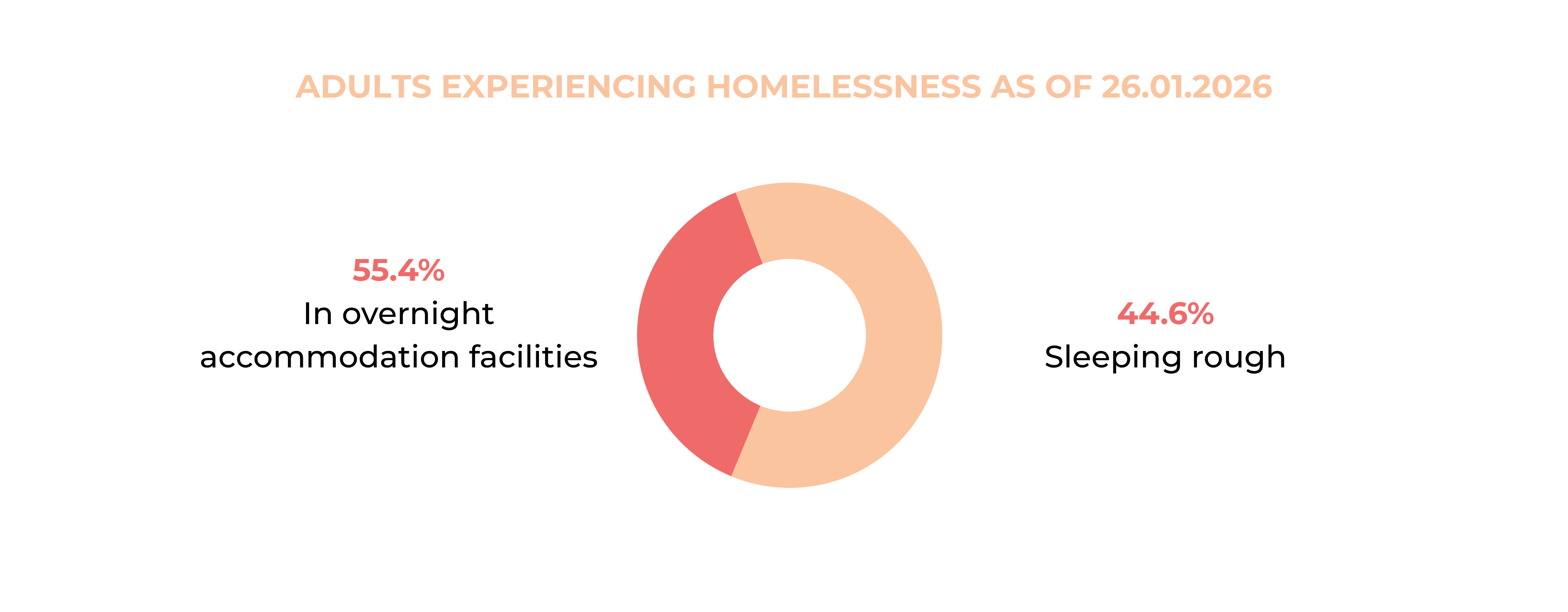
At that time, these cities had 6,678 places across 217 overnight homelessness accommodation facilities (Source: Istat).
Reforms
No major reforms reported.
Strategies
The Guidelines for Combating Severe Adult Marginalisation in Italy, published in 2015, provide the framework for preventing and addressing homelessness and extreme social exclusion among adults. These guidelines have more recently informed projects financed through the National Recovery and Resilience Plan, particularly investments in Housing First (Source: Italia Domani).